
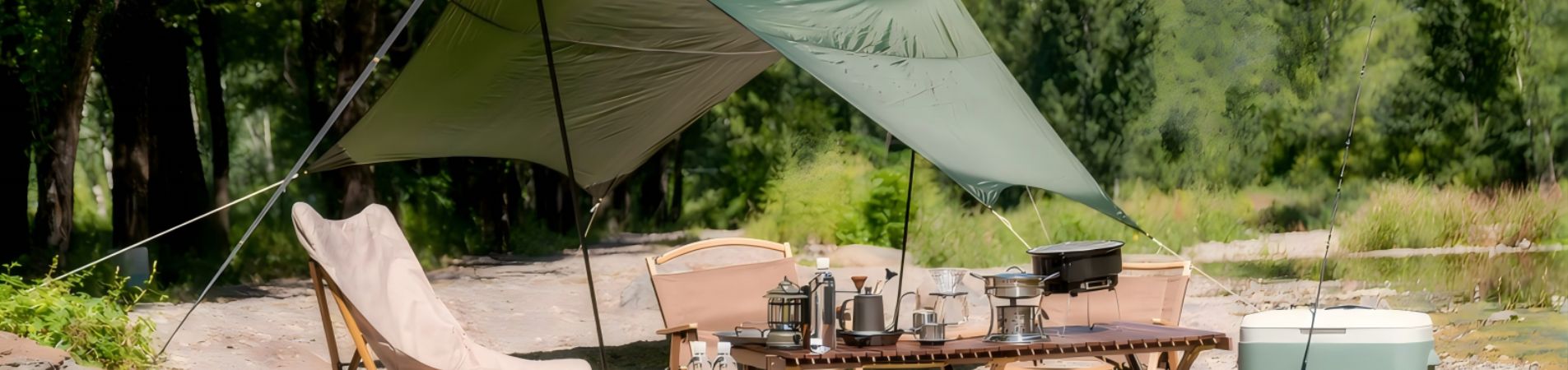
Choosing the right tent is a decision that affects comfort, safety and cost — whether you're an individual camper, an outdoor retailer or a bulk buyer for a campsite or retail chain. This guide breaks down the main tent categories (mountaineering, family and general outdoor), explains structural designs, materials, pros & cons, and gives a practical buying and procurement checklist you can use to evaluate suppliers and product lines.
Key Takeaways of This Tent Comparison Guide
- This guide explains the structural differences between mountaineering tents, family tents, and general outdoor tents.
- You will learn how tent materials, pole structures, and coatings affect performance, durability, and weight.
- The article provides a detailed comparison table to help buyers quickly understand which tent type fits their needs.
- We also include a practical procurement checklist for B2B buyers, covering testing standards, QC documents, and supplier evaluation.
- At the end, we introduce PengLong Camp — a leading OEM/ODM outdoor manufacturer — for buyers seeking reliable, export-grade tents and camping gear.
1. Overview: Tent Structures & Categories
Tent categories exist for a reason: each structural design solves a specific problem related to environment, load-bearing, wind resistance, interior comfort, or portability. Before diving into mountaineering, family, and general outdoor tents, it is crucial to understand how tents evolved and why these categories matter for both end users and procurement managers.
Modern tents generally fall into several structural families — dome, tunnel, geodesic, cabin, and inflatable — and each structure offers trade-offs in stability, weight, interior volume, ease of setup, and cost. For example, geodesic tents developed from expedition demands in alpine regions where high winds and snow loads require multi-pole reinforcement. Meanwhile, cabin tents grew out of the car-camping boom, emphasizing comfort, vertical walls, and room-like interiors instead of technical performance.
From a buyer’s standpoint, “tent type” is not simply a marketing label but a combination of engineering decisions: pole geometry, fabric tensile strength, hydrostatic head ratings, floor construction, and ventilation design. These factors influence not only user comfort but also production cost, logistics volume, and SKU positioning in the retail market.
This overview provides the foundational context for the detailed comparison that follows, helping both consumers and B2B purchasers understand why certain tent types excel in specific environments — and how these differences translate into real-world value, durability, and performance expectations.
2. Common Tent Structures
Dome
Dome tents use two or more crossing poles to create a curved, freestanding shape. They are versatile, usually freestanding and quick to pitch.
- Advantages: Easy setup, good wind performance for their weight, compact.
- Limitations: Limited vertical wall area (lower headroom).
Geodesic
Geodesic tents add more intersecting poles than a simple dome; the multiple intersections distribute stress and increase structural rigidity.
- Advantages: Excellent stability in wind and snow — preferred for mountaineering.
- Limitations: Heavier, more expensive, more complex set-up.
Cabin
Cabin tents prioritize livability: near-vertical walls and high ceilings create roomy interiors ideal for family and car camping.
- Advantages: Comfort, space for gear, multiple rooms possible.
- Limitations: Poor wind-shedding and bulky for transport.
Tunnel
Tunnel tents use parallel hoops/poles to maximize floor space relative to weight. Many are non-freestanding and require staking.
Air (Inflatable)
Air tents use inflatable beams in place of rigid poles — quick to erect and comfortable, but heavier and at risk from punctures.
Freestanding vs Non-Freestanding
Freestanding tents remain erect without stakes (helpful for quick moves); non-freestanding tents rely on staking and tension to achieve shape and are commonly used in ultralight designs where weight savings matter.
3. By Use Case: Mountaineering, Backpacking, Family, and 4-Season
Mountaineering Tents
Designed for alpine conditions: high wind, snow loads, and rapid temperature changes. Typical traits: geodesic or semi-geodesic frames, higher pole count, robust fabric and reinforced attachment points.
Backpacking
Goal: minimize pack weight and volume. Typical features: lightweight nylon, minimal pole count, compact packed size, and moderate weather protection (3-season).
Family / Car Camping
Goal: comfort and storage. Larger floorplans, multiple doors, and dedicated living space.
4-Season
Constructed to handle winter/harsh weather — less mesh, stronger frames, snow skirts and higher hydrostatic head on fabrics.
4. Materials & Components
Fabric Types
Nylon: Lightweight and strong, commonly used for backpacking tents. Requires coatings (PU, silicone) for waterproofing. Nylon can absorb moisture and may stretch when wet unless treated.
Polyester: Better UV resistance and lower stretch than nylon, often used in family and budget tents.
Canvas (Cotton): Breathable, durable and good thermal properties — heavy and suited for long-stay / glamping or touring camps.
Pole Materials
- Aluminum (7000/6000 series): Best strength-to-weight ratio — common in high-end and mountaineering tents.
- Fiberglass: Cheaper but heavier and more brittle — common in budget family tents.
- Steel: Heavy, durable — used for very large cabin/tent structures.
Coatings & Waterproofing
Two common coatings are PU (polyurethane) and silicone. Hydrostatic Head (HH) ratings measure waterproofness — for example, 1500–2000 mm is common for lightweight 3-season tents, while 3000 mm+ is preferred for heavy-duty or 4-season designs.
Floor Construction
Bathtub floors (floor fabric raised along the seams) improve water resistance. Reinforced floor fabrics and taped seams prevent wicking and leakage.
5. Detailed Comparison: Mountaineering vs Family vs Outdoor (Dome/Tunnel)
Quick Comparison Table
| Aspect | Mountaineering | Family (Cabin) | Outdoor (Dome / Tunnel) |
|---|---|---|---|
| Primary Strength | Extreme stability, wind & snow | Living space & comfort | Balanced portability and comfort |
| Typical Materials | Heavy-duty nylon, aluminum poles | Polyester or canvas, fiberglass/steel poles | Nylon/polyester, aluminum or fiberglass poles |
| Weight | High | Very high | Low to moderate |
| Ease of Setup | Complex | Moderate, space & time needed | Easy (dome) to moderate (tunnel) |
| Weather Performance | Excellent | Poor (in high wind) | Good (3-season) |
| Typical Use Cases | Alpine, winter expeditions | Family campsite, festivals, glamping | Backpacking, car camping, weekend trips |
Practically Speaking
If your buyer is a high-altitude guide service or expedition outfitter, geodesic (mountaineering) tents are a must. If you're selling to campsites, family tents and cabin models are important SKUs. For general outdoor retailers, dome and tunnel tents cover a broad market and present opportunities for multiple price tiers (budget family tents with fiberglass poles up to premium aluminum-framed backpacking models).
6. B2B & Procurement Considerations
For distributors, retailers and institutional buyers, tent selection must include manufacturing, QA, compliance and logistics perspectives.
Factory Capabilities
- Production capacity (monthly units by model)
- Pole manufacturing or sourcing (in-house vs third-party)
- Quality control processes and lab testing availability
Technical Documentation & Certifications
- Hydrostatic head test reports
- Tensile and tear strength reports for fabrics
- REACH / RoHS or other regional chemical compliance where needed
- ISO 9001 for factory quality systems
Customization & OEM/ODM
Common B2B requests: bespoke colors, logo printing, packaging alterations, custom pole lengths and extra vents. Ask about minimum order quantity (MOQ), lead times, and samples policy.
Packaging & Logistics
Family tents often ship in larger cartons and require different palletization than bundled backpacking tents. Consider volumetric weight, container utilization and seasonal demand for inventory planning.
7. Quality Tests and Performance Metrics
Key tests you should request from suppliers or verify in independent labs:
- Hydrostatic Head (HH) — Waterproof rating (mm). Higher is better for heavy rain/4-season tents.
- Tear Strength — Fabric resistance to tearing under load.
- Seam Strength & Seam Taping — Ensures welded/taped seams hold under pressure and water exposure.
- Pole Flexural Strength — How poles bend and recover; aluminum alloy grade matters.
- Wind Tunnel / Field Load Test — Real-world simulation for wind resistance.
- UV Aging — Measures fabric degradation for sun-exposed products.
- Flame Retardancy — If required by local regulations (e.g., for event or rental tents).
Ask suppliers for test reports and independent third-party lab certificates when evaluating new models.
8. Buying Checklist (Quick Reference)
- Define primary use: alpine, family, or general outdoor.
- Confirm seasonal rating (3-season vs 4-season).
- Check fabric type and HH rating (e.g., 1500–3000+ mm).
- Review pole material & section count (aluminum preferred for mountaineering).
- Inspect floor design (bathtub floor, denier rating).
- Ask for QC reports: seam sealing, tear strength, pole tests.
- Request production lead time, MOQ, and sample availability.
- Verify packaging dimensions and palletization for shipping costs.
- Confirm warranty, spare parts (poles, repair kits) and after-sales policy.
9. FAQs
Q: What is the difference between a 3-season and 4-season tent?
A: 3-season tents focus on spring, summer and fall — ventilated, lighter and not designed to handle heavy snow. 4-season tents have stronger frames, limited mesh for insulation and features like snow skirts to handle winter conditions.
Q: How do I interpret hydrostatic head (HH) ratings?
A: HH is measured in millimeters; it represents the water column required to force water through the fabric. For light showers 1000–1500 mm can suffice; for heavy rain or prolonged exposure, 2000–5000 mm is preferable.
Q: Are geodesic tents worth the cost for casual campers?
A: For casual campground use, geodesic tents are often over-specified and heavier. They are worth it for high-wind or alpine environments, but not necessary for typical family camping.
Q: What materials are best for UV resistance?
A: Polyester performs better under UV exposure than nylon; however, coatings and fabric treatments (UV inhibitors) are also critical regardless of base fabric.
Q: What should a B2B buyer request from a new tent supplier?
A: Samples, test reports (HH, tear strength), factory audit info, MOQ, lead times, warranty terms, and references from other buyers. Also check the supplier's ability to provide replacement parts and spare poles for after-sales support.
10. Conclusion
Mountaineering, family, and outdoor tents each play distinct roles in the outdoor equipment market. Whether prioritizing stability in extreme conditions, maximizing interior comfort for family trips, or achieving a balanced design for general camping, choosing the right tent requires understanding structural differences, materials, and real-world performance.
For buyers, retailers, or outdoor brands looking for a reliable manufacturing partner, PengLong Camp stands out as a global-grade supplier with deep expertise and strong production capabilities. Based in Ningbo, China, PengLong Technology operates a modern 15,000 m² facility and exports to more than 80 countries, earning strong recognition in Europe, North America, Australia, and the Middle East. With ISO9001 certification, CE compliance, multiple patents, and a decade of steady growth, the company consistently delivers durable, high-performance camping tents and outdoor gear.
Whether you need OEM/ODM support for camping tents, outdoor tables and chairs, or full outdoor equipment collections, PengLong Camp offers stable production capacity, strict quality control, and professional export service. Their philosophy — Customer First, Integrity Uppermost, Quality Oriented — makes them a trusted long-term partner for outdoor brands, wholesalers, and large retail chains seeking reliability and continuous product innovation.
If you're building or expanding an outdoor equipment product line, PengLong Camp is an excellent partner to consider for your next procurement cycle.